3.5 Mm T Oblique Angled Plate About
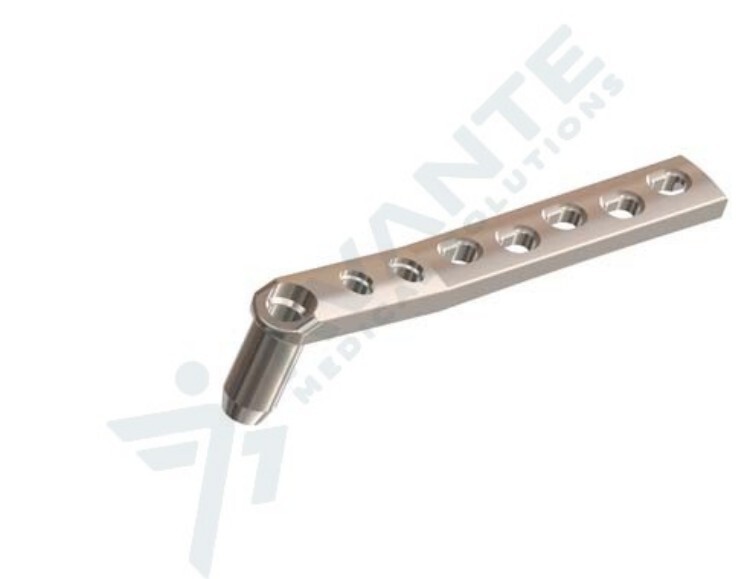
A 3.5mm T Oblique Angled Plate is a type of orthopedic implant used in fracture fixation and bone reconstruction surgeries. It is specifically designed to provide stable fixation and alignment for fractures that require oblique angulation. The 3.5 Mm T Oblique Angled Plate is shaped like the letter T, with a vertical stem and a horizontal arm. The stem provides stability along the length of the bone, while the oblique angled arm allows for fixation and angular stability at an oblique angle.
Versatile Design for Reliable FixationEngineered with a T-shaped, oblique angled arm (30-45 curvature), the plate's configuration allows optimal placement on long bones, matching natural anatomical contours for secure internal fixation. Its flexibility and dynamic hole design enable customized stability for each patient's needs.
Premium Medical-Grade MaterialsManufactured using medical-grade Stainless Steel or Titanium, these plates provide outstanding corrosion resistance and biocompatibility, minimizing the risk of adverse reactions. They are MRI conditional (Titanium), radiopaque for proper post-surgical imaging, and can be recycled after use.
Strict Sterilization and Packaging StandardsEach plate is individually packaged and sterilized using autoclave processes, guaranteeing safety up to 134C. Proper storage keeps the plate shelf-stable and sterile for up to five years, ensuring it remains ready and reliable for surgical intervention at any time.
FAQ's of 3.5 Mm T Oblique Angled Plate:
Q: How is the 3.5 mm T Oblique Angled Plate used in orthopedic surgery?
A: This plate is applied for internal fixation of fractures, osteotomies, and nonunions in long bones like the femur, tibia, or humerus. Surgeons attach it with 3.5 mm cortical bone screws to provide stable, anatomical alignment and promote bone healing.
Q: What are the available surface finish and material options for this plate?
A: The plate is offered with either a polished or satin finish, made from high-grade Stainless Steel (metallic silver) or Titanium alloy (dull grey), both ensuring superior corrosion resistance and biocompatibility.
Q: When should I use a plate with dynamic compression or locking combination holes?
A: Combination holes allow the surgeon to choose between compression for fresh fractures or locking for osteoporotic bone or nonunions, providing versatility according to different fracture patterns and bone quality.
Q: Where is the plate most commonly implanted?
A: It is typically implanted in long bones such as the femur, tibia, or humerus during internal fixation procedures to treat fractures or osteotomies, placed according to the anatomical requirements and fracture configuration.
Q: What are the benefits of this plate's oblique angled, T-shaped design?
A: The oblique angled T-shape aligns well with the bone's natural anatomy, enhances fixation in challenging locations, and facilitates better distribution of mechanical forces, optimizing patient outcomes.
Q: How should the plates be stored to maintain sterility and shelf life?
A: Store the plates in their original, unopened sterile packaging, in a clean, dry environment at room temperature. This setup preserves sterility and ensures the five-year shelf life is maintained.
Q: Are these plates suitable for MRI and post-surgical radiology?
A: Plates manufactured using Titanium are conditionally MRI safe, while all variants are radiopaque, allowing clear visualization on X-rays and other imaging modalities for post-operative assessment.
 08045812906




 Send Inquiry


 Send Inquiry
 Send Inquiry
 Send SMS