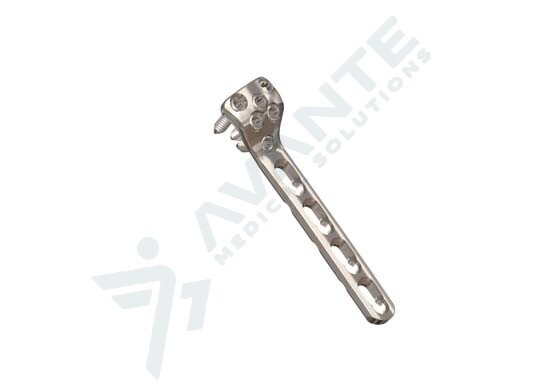
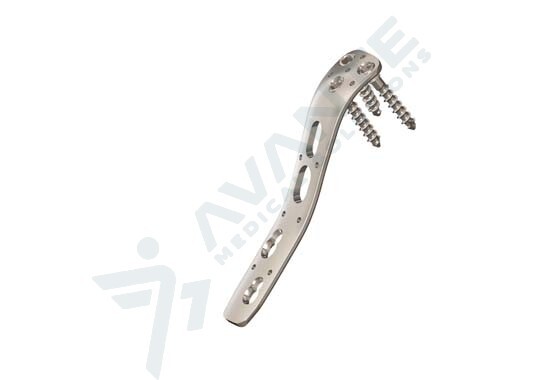
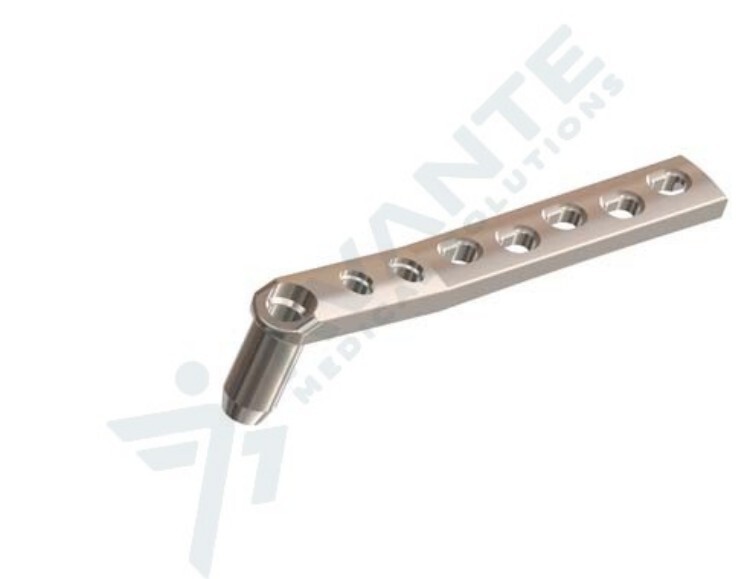
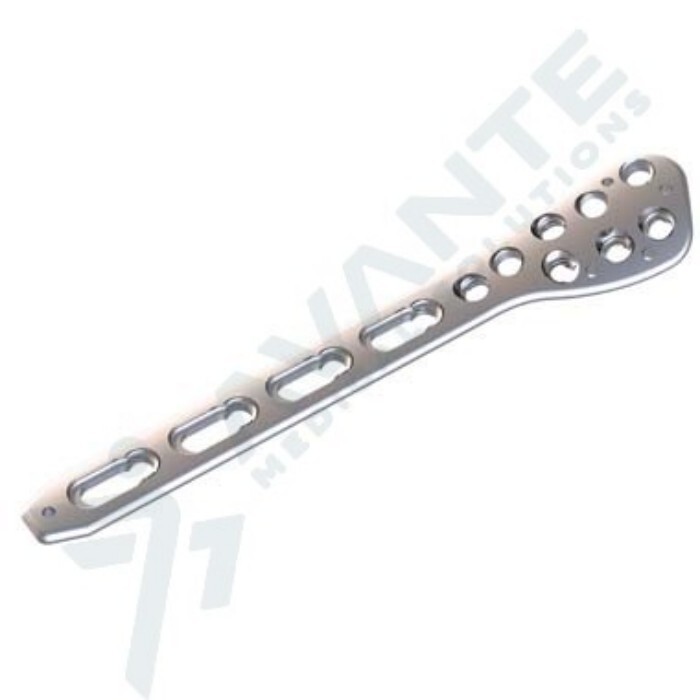
About 3.5Mm Proximal Humerus Plate
During surgery, the 3.5Mm Proximal Humerus Plate is positioned on the posterior aspect of the proximal humerus and fixed in place using screws or other fixation devices. The plate provides stability to the fracture site, allowing for proper alignment and healing. The screws are inserted through the plate and into the bone to hold the fracture fragments together. The specific design and placement of the Proximal Humerus Periarticular Posterior Plate allow for fixation and stability of fractures occurring near the shoulder joint.
Innovative Design for Secure FixationThe 3.5mm Proximal Humerus Plate is engineered for superior fixation in challenging fractures and osteotomies of the proximal humerus. Its combi holes allow flexibility in using either locking or cortical screws, while angular stability is ensured through dedicated locking holes. Available in multiple lengths and featuring low-profile, anatomic curvature, the plate provides excellent conformity and reduces the risk of soft tissue irritation.
Advanced Material and Surface FinishConstructed from medical-grade steel or non-magnetic titanium, the plate offers high strength and exceptional biocompatibility, meeting ISO 10993 standards. Its polished or bead-blasted finish ensures durability and ease of handling during surgery. The device's anatomic, pre-contoured shape helps achieve precise implant fit, while color options like metallic silver or blue enhance identification in the operating room.
Safe, Sterile, and Reliable in Clinical UseEvery plate is supplied sterile in a blister or peel pouch, suitable for immediate surgical use. The implant's shelf life is a minimum of five years when unopened, with sterilization achievable via Gamma, ETO, or autoclave methods. Marked for X-ray visualization and packaged individually, it meets the demanding requirements of modern orthopedic procedures, while being recyclable for responsible disposal.
FAQ's of 3.5Mm Proximal Humerus Plate:
Q: How is the 3.5mm Proximal Humerus Plate installed during surgery?
A: The plate is fixed to the proximal humerus using 3.5mm locking or cortical screws through multiple combi holes, providing both angular stability and secure fixation. The anatomic, pre-contoured shape fits closely to the bone, and X-ray markers guide accurate placement. The device is compatible with screws designed for both locking and cortex functions, allowing the surgeon flexibility during installation.
Q: What are the primary indications for using this plate?
A: This implant is recommended for managing fractures, osteotomies, and nonunions of the proximal humerus. Its design ensures firm bone stabilization, making it suitable for a variety of complex injuries and reconstructive procedures in the proximal shoulder region.
Q: When should surgeons choose locking screws versus cortex screws with this plate?
A: Locking screws are preferred when angular stability is needed, such as in osteoporotic bone or multi-fragmented fractures, whereas cortex screws can be used for standard compression and rigid fixation in good quality bone. The combi hole design allows either option in each hole, adapting to individual patient and fracture requirements.
Q: Where are these plates commonly used and by whom?
A: These plates are intended for clinical use in hospitals and orthopedic surgeries across India. They are typically utilized by orthopedic surgeons specializing in trauma and fracture management of the upper limb, particularly the proximal humerus.
Q: What process ensures the sterility and safety of the product before implantation?
A: Each plate undergoes sterilization using approved methods such as Gamma irradiation, ETO, or autoclave. It is individually sealed in sterile packaging, ensuring safety until opened for surgical use. The implant's shelf life is at least five years when stored unopened.
Q: What are the benefits of the anatomic, low-profile design?
A: The pre-contoured anatomic design provides an optimal fit to the proximal humerus, reducing intraoperative bending and adjustment. Low-profile edges minimize the risk of soft tissue irritation, leading to improved post-operative outcomes and patient comfort.