About 3.5 Mm Limited Contact Dynamic Compression Plate
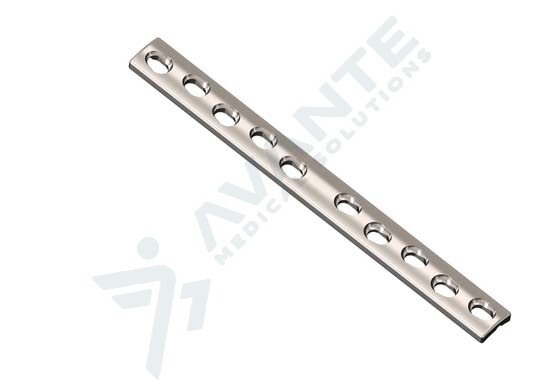
A 3.5mm Limited Contact Dynamic Compression Plate (LC-DCP) is a type of orthopedic implant used in fracture fixation and bone reconstruction surgeries. It is designed to provide stable fixation and promote healing while minimizing disruption to the blood supply and the surrounding soft tissues. The 3.5 Mm Limited Contact Dynamic Compression Plate is specifically designed to minimize contact with the bone surface, leaving gaps or limited contact areas to preserve blood supply and promote biological healing.
Orthopedic Innovation for Bone FixationThe 3.5 Mm Limited Contact Dynamic Compression Plate provides advanced solutions for managing complex fractures and bone corrections. Its precise anatomical contouring and unique hole configuration enable both compression and angular stability, ensuring optimal healing. Designed for flexible application, this plate is suitable for various long bones and adapts to a wide range of fracture types, supporting surgeons in delivering better outcomes for adult patients.
Precision Manufacturing and Safety StandardsManufactured under stringent ISO 13485 certification, each plate adheres to global standards for biocompatibility and corrosion resistance. Both stainless steel and titanium versions are processed following ASTM guidelines, ensuring consistent quality and safety. The plates are sterilized by EO Gas or Gamma Radiation and have a shelf life of five years, delivering reliability and peace of mind for hospitals, manufacturers, and medical suppliers.
Versatile and Durable DesignFeaturing combi holes for both compression and locking screws and a limited contact under-surface, the plate ensures reduced bone-to-implant contact and enhanced biological fixation. Anatomically contoured with variable curvature, it supports optimal fit across a range of clinical requirements. The plate's flexibility, recyclable materials, and customization in length and holes make it an efficient choice for diverse orthopedic procedures.
FAQ's of 3.5 Mm Limited Contact Dynamic Compression Plate:
Q: How is the 3.5 mm Limited Contact Dynamic Compression Plate used clinically?
A: This plate is primarily used in hospitals for fracture fixation, osteotomies, and trauma surgeries involving long bones like the femur, tibia, and humerus. Surgeons secure the plate to the bone using 3.5 mm cortical or locking screws via combi holes that offer both compression and locking capabilities, promoting optimal bone healing.
Q: What materials are available for the LC-DCP, and how do they benefit surgical patients?
A: The plate comes in surgical-grade stainless steel (ASTM F138) or titanium (ASTM F67/F136). Titanium plates offer non-magnetic properties for MRI compatibility and are lighter, while both options provide excellent biocompatibility, corrosion resistance, and strength to ensure safe, durable fixation.
Q: When should the 3.5 mm LC-DCP be selected over other plates?
A: This plate is recommended when limited bone contact, dynamic compression, and the possibility to use both locking and standard screws are needed. Its anatomic contour and variable length (50-200 mm, 4-12 holes) make it suitable for adult patients requiring stable, reliable fixation in long bone procedures.
Q: Where can these plates be sourced, and who is eligible to use them?
A: The plates are distributed, supplied, and manufactured in India, made available to hospitals, orthopedic clinics, and surgical centers. Only trained healthcare professionals should use these implants during designated bone fixation surgeries.
Q: What is the sterilization process and shelf life of these plates?
A: Each plate is terminally sterilized using either EO Gas or Gamma Radiation, ensuring sterility. The shelf life is five years when stored in its original, sealed packaging, maintaining safety and efficacy for clinical use.
Q: How does the plate's design enhance the fracture healing process?
A: With anatomically contoured geometry and combi holes, the plate allows precise application for both locked and compression techniques, reducing bone-implant contact and supporting better biological healing. Its flexibility also adapts to anatomical variations, further optimizing outcomes.
Q: What are the benefits of the plate's radiopaque and recyclable features?
A: Radiopacity ensures the plate is visible under X-ray imaging, allowing surgeons to monitor alignment and healing. The ability to recycle the implant (post-use) supports sustainable clinical practices and environmental responsibility.
 08045812906





 Send Inquiry


 Send Inquiry
 Send Inquiry
 Send SMS