Posterolateral Distal Humerus Plate About
A Posterolateral Distal Humerus Plate is a specific type of medical implant used in orthopedic surgery to treat fractures and other injuries involving the distal (lower) end of the humerus bone in the arm, specifically fractures occurring in the posterolateral (back and outer) aspect of the distal humerus. The plate is designed to provide stability and support to the fractured bone fragments, promoting proper alignment and facilitating the healing process.
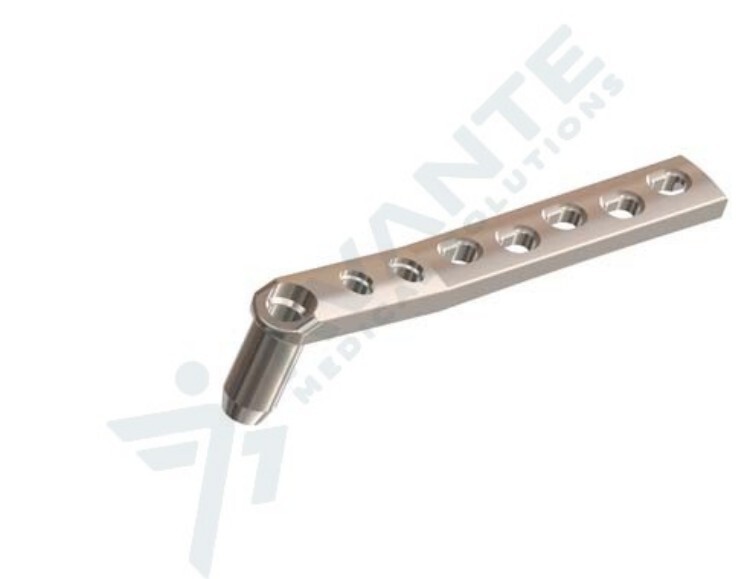
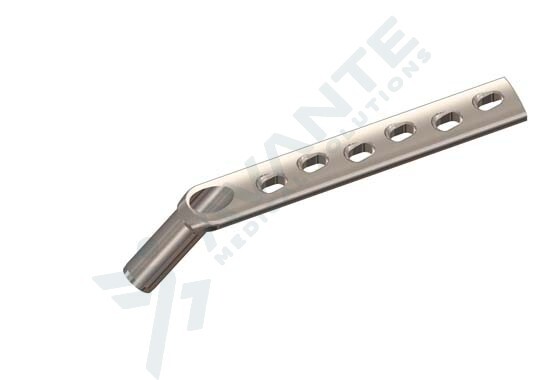
Anatomic, Precontoured Plate DesignEngineered to match the complex curvature of the distal humerus, the plate supports optimal anatomical restoration. Its anatomically precontoured and curved structure ensures precise fit for the posterolateral distal humerus, improving surgical outcomes and providing necessary stability for complex fractures.
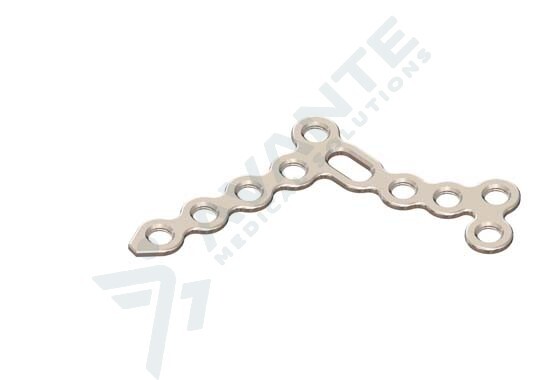
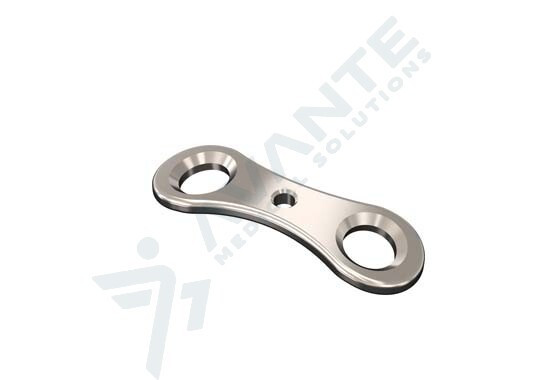
Versatile Fixation and Size OptionsThe plate is available in sizes ranging from 3 to 9 holes and supports both locking and cortical screws of 3.5 mm diameter, giving surgeons flexibility in fixation. Multiple length, width, and thickness options allow customization for different fracture patterns and patient anatomies, ensuring a reliable solution for diverse clinical needs.
Sterilization and Material ChoicesManufactured from stainless steel or titanium (non-magnetic), these plates can be sterilized using standard autoclave or EO gas methods, ensuring sterility for safe surgical application. The highly polished and smooth finish offers biocompatibility and minimizes tissue irritation during and after implantation.
FAQ's of Posterolateral Distal Humerus Plate:
Q: How is the Posterolateral Distal Humerus Plate used in fracture fixation?
A: This plate is surgically attached to the posterolateral aspect of the distal humerus using 3.5 mm locking or cortical screws to stabilize complex intra-articular or extra-articular fractures, ensuring proper bone alignment during healing.
Q: What screw types and sizes are compatible with this plate?
A: The plate is specifically designed for use with 3.5 mm diameter locking and cortical screws, offering surgeons flexibility to achieve optimal fixation based on fracture requirements.
Q: When should a surgeon select the titanium version of this plate?
A: The titanium version should be chosen when a non-magnetic implant is required, such as for patients who may undergo MRI procedures to prevent interference with imaging.
Q: Where is this plate anatomically positioned during surgery?
A: It is positioned on the posterolateral surface of the distal humerus, following its anatomical contour to maximize stability and avoid impingement on surrounding tissues.
Q: What sterilization methods can be used with this implant?
A: The plate can be sterilized using either autoclave (steam sterilization) or ethylene oxide (EO) gas methods, making it suitable for hospital operating room protocols.
Q: How does the precontoured design benefit fracture repair?
A: The precontoured and anatomically curved design enables precise adaptation to the distal humerus, reducing the need for intraoperative bending and expediting accurate fracture alignment and healing.
 08045812906




 Send Inquiry


 Send Inquiry
 Send Inquiry
 Send SMS